
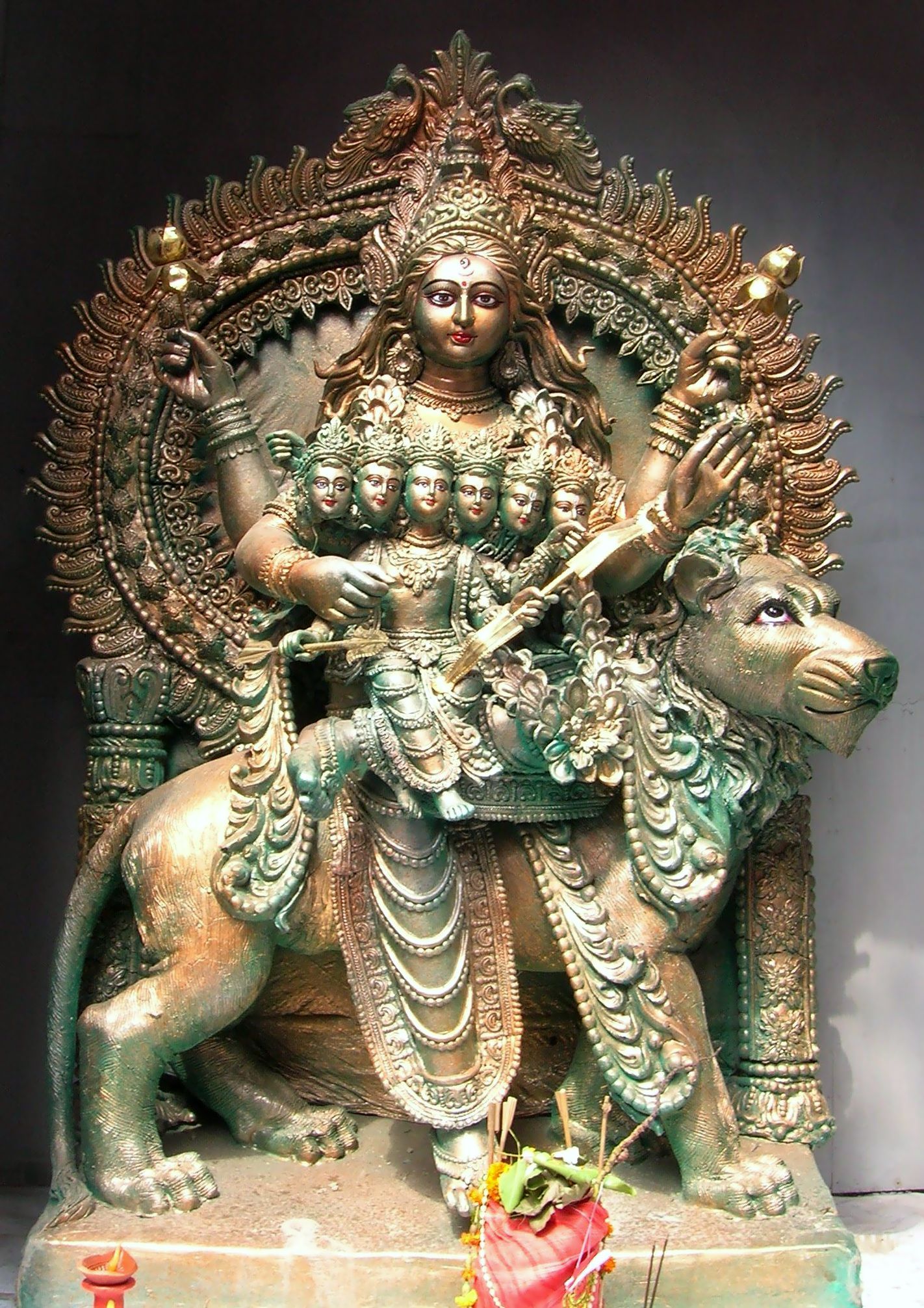
The Fifth Guardian of Sacred Time
In the sacred progression of Navratri, the fifth day marks a profound transformation in divine energy. Here, devotees encounter Skandamata – not merely another manifestation of Goddess Durga, but a cosmic mother whose very existence bridges the nurturing feminine divine with the fierce warrior spirit needed to maintain universal order.
Her name carries within it the essence of her divine purpose: “Skanda,” referring to the warrior god Kartikeya, and “Mata,” meaning mother. Yet this simple etymology barely hints at the complex mythological tapestry from which her story emerges – a narrative of cosmic crisis, divine intervention, and the ultimate triumph of dharma over chaos.
The Cosmic Crisis: When Gods Faced Their Greatest Challenge
To understand Skandamata, we must first journey to a time when the very foundations of the universe trembled under threat. The demon Tarakasura had achieved what seemed impossible – a boon from Lord Brahma himself that rendered him nearly invincible. The terms were deceptively simple yet devastatingly effective: only a son of Lord Shiva could destroy him.
Tarakasura’s calculation appeared flawless. Shiva, the eternal ascetic, had withdrawn into profound meditation following the tragic death of his beloved Sati. Lost in cosmic consciousness, he seemed unlikely to marry again, let alone father a child. With this cosmic loophole secured, Tarakasura unleashed terror across the three worlds, enslaving even the gods themselves.
The celestial realms faced an unprecedented crisis. Divine order had been subverted not through brute force alone, but through a clever manipulation of cosmic law itself. The very system designed to maintain balance had become the instrument of its near-destruction.
Divine Strategy: The Sacred Marriage and Cosmic Birth
Faced with this existential threat, the gods orchestrated one of the most significant divine interventions in Hindu mythology. They recognized that only through the sacred union of Shiva and Parvati could the prophecy be fulfilled and cosmic balance restored.
This was no ordinary matchmaking. Parvati, the reincarnation of Sati, had to awaken Shiva from his meditation through intense tapas (spiritual practices). Their eventual union represented more than romantic love – it symbolized the cosmic marriage between consciousness (Shiva) and creative energy (Shakti).
From their divine embrace emerged an energy so intense, so pure, that it could not be contained by ordinary means. This fiery essence was carried by Agni, the fire god, and placed in the sacred Ganges, where it manifested as the six-faced warrior god Skanda – also known as Kartikeya or Murugan.
The Birth of Skandamata: When Love Becomes Cosmic Protection
The moment Goddess Parvati embraced this radiant child as her own, she transformed into Skandamata. This transformation represents one of the most profound mysteries in Hindu divine philosophy – how maternal love becomes a force capable of sustaining cosmic order.
Skandamata embodies what Hindu philosophy calls “Kriyatmak Jnana” – knowledge in action, or action driven by perfect wisdom. She represents the confluence of three fundamental divine powers:
- Iccha Shakti (the power of divine intention)
- Jnana Shakti (the power of cosmic knowledge)
- Kriya Shakti (the power of righteous action)
Through her, we see how the nurturing aspect of the divine feminine does not oppose its fierce protective nature, but rather provides its deepest foundation.
The Iconography of Divine Balance
Skandamata’s visual representation reveals layers of symbolic meaning that speak to both the devotee’s heart and philosophical understanding:
The Radiant Mother: Depicted with a pure white or golden complexion, she embodies the Sanskrit concept of “Shubhra” – absolute purity. Her three eyes represent the ability to perceive past, present, and future simultaneously, while her four arms demonstrate her capacity to simultaneously nurture and protect.
Sacred Positioning: Seated upon a lotus in padmasana, she is also known as “Padmasini.” The lotus, emerging unstained from muddy waters, represents the soul’s journey toward enlightenment despite worldly challenges.
The Divine Child: In her upper right arm, she cradles infant Skanda, while her lower right hand extends in Abhaya Mudra – the gesture that dispels fear. This positioning reveals a profound truth: true security comes not from the absence of challenges, but from the presence of divine protection.
Lotus Symbolism: Her left hands hold lotus flowers, representing both detachment from worldly desires and the ultimate goal of spiritual evolution. The lion beneath her symbolizes fearless courage in the face of adversity.
The Spiritual Science: Visuddha Chakra and Planetary Connections
Skandamata governs the Visuddha Chakra (throat chakra), the fifth energy center in the human spiritual system. This connection reveals the deeper science behind her worship. When a devotee’s consciousness reaches this level through her grace, their mind becomes like a “waveless ocean” – perfectly calm and receptive to higher truths.
Her association with Mercury (Budha) adds another dimension to her influence. Mercury governs communication, intellect, wisdom, and creative expression. Through Skandamata’s blessing, devotees gain not just knowledge, but the ability to articulate truth with clarity and power.
This planetary connection explains why her worship enhances:
- Divine eloquence and truthful speech
- Intellectual clarity and wisdom
- Creative expression and artistic abilities
- Business acumen and practical intelligence
The Unique Divine Bargain
Skandamata offers devotees something truly extraordinary in the pantheon of Hindu deities – a double blessing. When one worships her with sincere devotion, they automatically receive the blessings of both the Divine Mother and her warrior son, Lord Skanda. This represents perhaps the most comprehensive divine protection available to spiritual seekers.
From Skandamata comes:
- Maternal nurturing and protection
- Wisdom and spiritual guidance
- Fertility and family harmony
- Mental peace and emotional balance
From the simultaneous blessing of Lord Skanda comes:
- Warrior strength and courage
- Victory over obstacles and enemies
- Leadership abilities and strategic thinking
- Protection from negative forces
The Path of Sacred Practice
The worship of Skandamata follows specific spiritual protocols that maximize the receptivity of the devotee:
Sacred Mantras: The primary invocation – “Om Devi Skandamatayai Namah” – creates a vibrational bridge between the devotee’s consciousness and the goddess’s divine frequency.
Color Symbolism: White, the designated color for her worship, represents not emptiness but fullness – the presence of all possibilities in their purest state.
Preferred Offerings: Her particular fondness for bananas reveals a practical spiritual truth – she appreciates simple, natural offerings given with genuine devotion over elaborate rituals performed mechanically.
The Contemporary Relevance of Ancient Wisdom
In our modern age of rapid change and complex challenges, Skandamata’s message remains profoundly relevant. She teaches us that true strength comes from the integration of wisdom with compassionate action. Her story reminds us that sometimes the greatest transformations emerge from the most challenging circumstances.
For parents, she represents the divine model of nurturing that empowers rather than coddles, that prepares children for life’s battles while maintaining unconditional love. For spiritual seekers, she demonstrates how advancement on the path requires both tender self-care and fierce determination.
For anyone facing seemingly impossible obstacles, her mythology offers hope – just as the gods found a way to overcome Tarakasura’s clever manipulation of cosmic law, creative solutions exist for our most daunting problems when we align ourselves with divine wisdom.
The Eternal Dance of Protection and Love
Skandamata stands as a testament to one of Hinduism’s most profound insights – that the universe is neither coldly mechanical nor chaotically random, but is instead guided by an intelligence that is simultaneously transcendent and intimate, powerful and loving.
Through her worship on the fifth day of Navratri, devotees participate in this cosmic dance, aligning their personal journey with the eternal rhythm of creation, preservation, and transformation. They discover that within themselves lies both the nurturing mother and the fearless warrior – both the wisdom to know what must be protected and the strength to protect it.
In Skandamata, we find not just a deity to be worshipped, but a mirror reflecting our own highest potential – the integration of love and power, wisdom and action, nurturing and protection that creates the foundation for both personal fulfillment and cosmic harmony.
Leave a Reply