
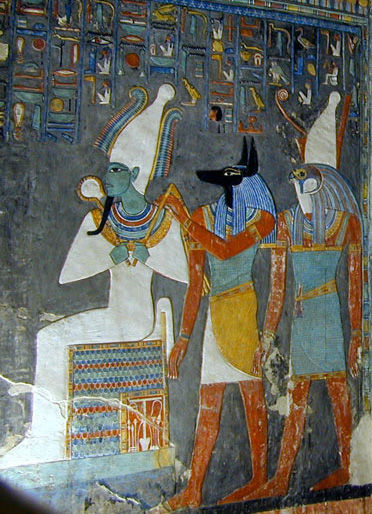
As I delved into the intricate world of Egyptian mythology, I found myself confronting something far more complex than I initially expected. The divine genealogy of ancient Egypt isn’t just a simple family structure—it’s a sophisticated cosmological framework spanning over 3,000 years and encompassing more than 1,500 named deities. What began as curiosity about familiar names like Osiris and Isis soon unveiled a vast, interconnected web of divine relationships that ancient Egyptians used to understand existence itself.
Origins in the Primordial Void
Understanding Egyptian divine genealogy begins in the most profound place imaginable: absolute nothingness. In Egyptian cosmology, before the divine lineages emerged, there was Nun—the primordial waters of chaos. Not emptiness as we might imagine it, but a formless, infinite potential containing everything that could ever be.
From this cosmic soup emerged Atum, whose very name means “the completed one” and who sits at the very root of divine ancestry. What struck me most about Atum’s story is how the ancient Egyptians described this first god as “Great He-She”—embodying both male and female creative principles. This wasn’t just poetic language; it reflected a sophisticated understanding that creation required duality, even within unity.
Key Cosmological Transformations:
- Primordial chaos becomes conscious potential
- Self-creation through divine will
- Duality emerges from unity
- Ordered existence springs from formless void
Atum’s act of self-creation through spitting, sneezing, or masturbation (depending on the version) represents something profound in divine mythology: the idea that conscious will could emerge from unconscious potential, that ordered genealogy could spring from primordial chaos through divine intent.
The Great Ennead: Core Structure of Divine Lineage
Learning about the Great Ennead (the nine primary gods) revealed the carefully structured cosmic hierarchy that forms the backbone of Egyptian divine genealogy. This sacred lineage mirrors the process of creation itself:
First Generation of Divine Ancestry
From Atum came Shu (air) and Tefnut (moisture)—the basic elements needed for life. These siblings became lovers in the divine lineage, establishing the pattern of sibling marriages that would characterize Egyptian mythology.
Second Generation Divine Lineage
Shu and Tefnut produced Geb (earth) and Nut (sky) in the continuing genealogy. What fascinated me here was the gender reversal—in Egyptian thought, the earth was masculine and the sky feminine, completely opposite to most other mythologies. Nut was often depicted as a woman arched over the earth, her star-covered body forming the heavens.
Third Generation: The Heart of Divine Drama
The children of earth and sky became the most famous figures in Egyptian mythology: Osiris, Isis, Set, Nephthys, and Horus the Elder. These weren’t just gods—they were the embodiment of civilization’s fundamental forces and conflicts, creating the complex relationships that define divine genealogy.
Divine Drama Within Sacred Lineages
As I explored deeper into Egyptian mythology, I discovered that these divine genealogies don’t present perfect, distant deities. Instead, the sacred lineages reveal gods who experience jealousy, betrayal, love, and redemption in ways that feel remarkably human.
The Anubis Mystery in Divine Ancestry
The most compelling example is the mysterious parentage of Anubis, the jackal-headed god of mummification. While sometimes listed as Set’s son, the more prevalent myth tells of an affair between Osiris and his sister-in-law Nephthys. According to this version, Nephthys disguised herself as Isis to seduce Osiris, then abandoned the resulting child in fear of her husband Set’s wrath.
This story reveals layers of meaning within divine genealogy: themes of deception and forgiveness, the complexity of family loyalties, and the idea that even divine mistakes could lead to important outcomes—Anubis became crucial to Egyptian beliefs about death and the afterlife.
The Two Horus Figures in Sacred Lineage
Perhaps the most intriguing aspect of Egyptian mythology is how Horus appears in two distinct forms: Horus the Elder (one of the original children of Geb and Nut) and Horus the Younger (son of Osiris and Isis). These aren’t different gods with the same name—they’re understood as different aspects of the same divine principle within the sacred lineage.
Regional Variations: Multiple Creation Narratives
One of the most intriguing aspects of studying Egyptian divine genealogy is how different cities developed their own creation stories and sacred lineages, each claiming their patron deity as the supreme creator. Rather than seeing this as contradiction, I’ve come to understand it as reflecting the Egyptian concept of multiple valid divine structures.
The Memphis Divine Triad
In the political capital, divine genealogy centered on Ptah as the supreme creator who spoke the world into existence. The Memphis Triad within this lineage—Ptah, his wife Sekhmet (the fierce lion goddess), and their son Nefertem (god of beauty and the lotus)—represented the balance of creation, destruction, and renewal.
The Hermopolitan Ogdoad
The city of Hermopolis worshipped the Ogdoad as part of their creation narrative—eight primordial deities arranged in four complementary pairs representing fundamental forces of chaos. These eight gods created a cosmic egg from which the sun god emerged, offering yet another perspective on divine ancestry.
The Theban Divine Structure
Thebes honored Amun (“the hidden one”) as the ultimate creator in their version of sacred lineage, paired with Mut (the mother goddess) and their son Khonsu (the moon god).
Complex Divine Identity Within Sacred Genealogy
Perhaps the most mind-bending aspect of Egyptian mythology is how individual deities could exist in multiple forms simultaneously. Thoth, the ibis-headed god of wisdom, exemplifies this complexity within divine lineage, having at least three origin stories: self-creating through speech, being born from Ra’s lips, or emerging from Set’s forehead during a rather bizarre mythological incident.
Rather than choosing one “correct” version for divine genealogy, Egyptian theology embraced all three as different ways of understanding the same fundamental truth about divine wisdom.
Solar Aspects in Divine Ancestry
Ra, the sun god, demonstrates another layer of complexity by merging with multiple deities to represent different aspects of the solar cycle:
- Khepri: Morning sun (scarab beetle form)
- Ra: Midday sun (falcon form)
- Atum: Evening sun (elderly man form)
This syncretism shows how Egyptian divine genealogy was fluid and adaptive rather than rigidly hierarchical.
Cosmic Implications: Order from Chaos in Sacred Lineages
As I pieced together these divine relationships, a larger pattern emerged. This genealogy isn’t just about who begat whom—it’s a map of how consciousness and order emerge from primordial chaos. Each generation represents a step further from the undifferentiated potential of Nun toward the complex, organized world humans inhabit.
Key Mythological Principles:
- Creation requires both unity and duality
- Destruction and renewal are eternally linked
- Divine consciousness manifests through multiple aspects
- Cosmic truth is multifaceted and paradoxical
The recurring themes of sibling marriages, divine conflicts, death and resurrection, and the merging of deities reflect Egyptian understanding of cosmic principles that governed both divine and human realms.
Understanding the Complete Divine Structure
What strikes me most about studying Egyptian divine genealogy is its sophisticated embrace of complexity and paradox. Unlike mythologies that present clear hierarchies and simple moral lessons, Egyptian sacred lineages acknowledge that cosmic truth is multifaceted and that understanding requires holding multiple perspectives simultaneously.
The Egyptian gods weren’t perfect beings to be worshipped from afar—they were dynamic forces whose relationships and conflicts explained everything from seasonal changes to social structures to the mysteries of death and rebirth. Their genealogy serves as both family history and cosmology, both entertainment and profound theological statement.
The Mythological Legacy
In exploring these intricate divine relationships, I’ve gained not just knowledge about ancient Egyptian beliefs, but insight into how human beings have always struggled to understand existence, meaning, and our place in the cosmic order. The primordial waters of Nun, from which the entire divine lineage emerged, perhaps represent something we all recognize: the vast mystery from which consciousness and meaning somehow arise.
This mythological framework created order from chaos, divine structure from primordial silence, and understanding from wonder. The Egyptian gods family tree stands as one of humanity’s most sophisticated attempts to map the invisible forces that shape existence, offering us a window into how ancient minds grappled with the fundamental questions that still occupy us today.
Leave a Reply