
Learning notes on Chinese Folklore
Chinese mythology is like a vast, shimmering tapestry filled with dragons that control the weather, phoenixes that herald peace, and fox spirits that can transform into beautiful women. These aren’t just old stories gathering dust on library shelves—they’re living, breathing parts of Chinese culture that continue to captivate people around the world today.
Why These Creatures Matter
Chinese folklore creatures are much more than fantasy entertainment. They’re the guardians of ancient wisdom, embodying values like courage, justice, and harmony that have shaped Chinese civilization for thousands of years. Each creature tells a story about how people should live, what virtues to strive for, and how to maintain balance in the world.
What makes Chinese mythology special is how it has evolved over time. Unlike rigid mythological systems, Chinese folklore has gracefully absorbed influences from Buddhism, Taoism, and Confucianism, creating a rich blend of spiritual and philosophical traditions. This flexibility has kept these ancient stories relevant and meaningful across generations.
The Four Heavenly Guardians
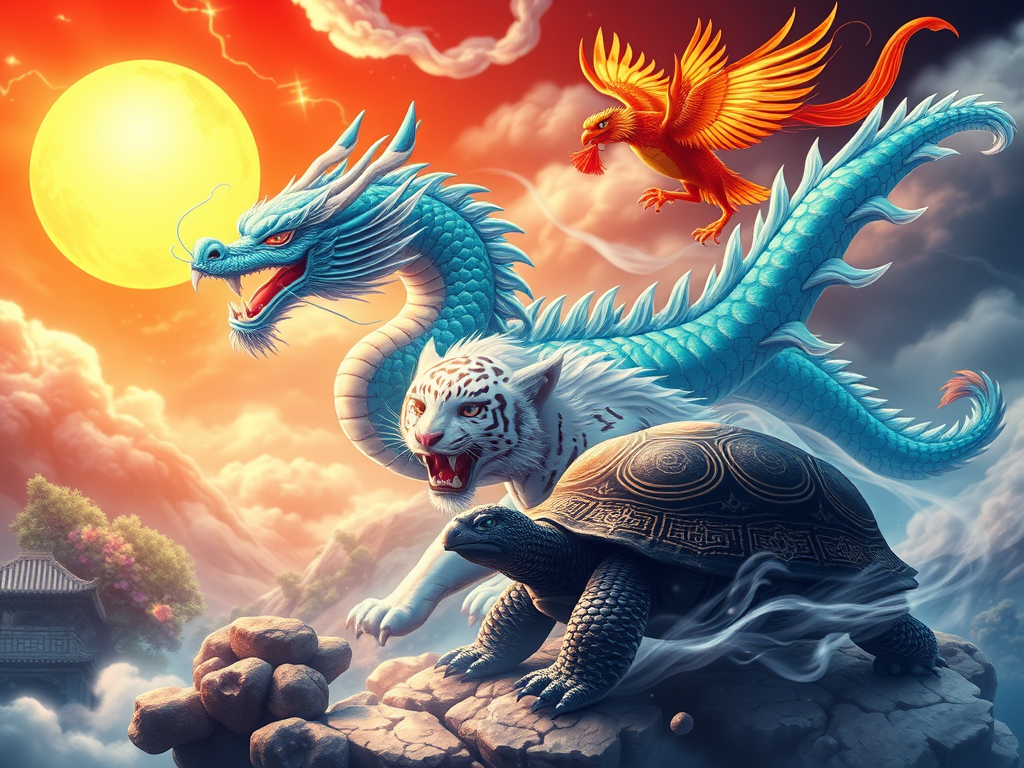
At the heart of Chinese cosmology stand the Four Symbols—mighty creatures that guard the cardinal directions and maintain cosmic order. Think of them as the ultimate cosmic security team, each with their own specialized role:
The Azure Dragon (Qinglong) rules the East, bringing the fresh energy of spring and the element of wood. This magnificent serpentine creature with four legs represents health, strength, and protection. Despite having no visible wings, it soars through the heavens, watching over all living things.
The Vermilion Bird (Zhuque) governs the South with the fierce energy of summer and fire. Often confused with the phoenix, this radiant bird embodies knowledge, duty, and the promise of favorable opportunities. Its bright plumage practically glows with Yang energy.
The White Tiger (Baihu) commands the West, channeling the crisp power of autumn and metal. Legend says a tiger’s fur turns white only after 500 years, marking its transformation into a fierce god of war. This creature represents strength and martial prowess.
The Black Tortoise (Xuanwu) protects the North with the deep wisdom of winter and water. Often depicted with a serpent companion, this ancient guardian symbolizes longevity, endurance, and the protective power of a strong shell against life’s storms.
Symbols of Good Fortune
Beyond the cardinal guardians, Chinese folklore is filled with creatures that bring luck, prosperity, and protection to those who honor them.
The Qilin might look fearsome with its dragon-like appearance, flowing mane, and single horn, but it’s actually one of the gentlest creatures in Chinese mythology. This benevolent being is said to refuse to harm even a blade of grass, yet it possesses the power to protect the innocent from evil. The Qilin’s appearance supposedly heralded the birth of Confucius, making it a symbol of wisdom and virtue.
Foo Dogs (or Foo Lions) aren’t actually dogs at all—they’re stylized lions brought to China by Buddhist monks. You’ll often see them in pairs guarding important buildings, with the male holding a ball representing worldly authority and the female protecting a cub, symbolizing nurturing care. These stone guardians are believed to ward off evil spirits and negative energy.
The Pixiu looks like a winged dragon or lion with an insatiable appetite for gold and silver. This makes it a powerful symbol for attracting wealth and prosperity. But the Pixiu isn’t just about money—it’s also thought to drain malicious energies from demons and evil spirits, converting them into positive fortune.
The Phoenix: Grace and Virtue
The Chinese Phoenix, or Fenghuang, is perhaps one of the most beautiful creatures in all of mythology. With its rooster’s beak, swallow’s face, snake’s neck, and magnificent five-colored feathers, it represents the perfect harmony of different elements coming together.
The Fenghuang embodies five Confucian virtues: benevolence, honesty, knowledge, faithfulness, and propriety. Its very feathers are said to represent virtue, righteousness, courtesy, benevolence, and faith. As the feminine counterpart to the dragon, the phoenix symbolizes the empress and represents the perfect balance of yin and yang energies.
The Tricksters and Shape-Shifters
Not all Chinese folklore creatures are benevolent guardians. Some are mischievous tricksters that blur the line between good and evil, reminding us that the world is complex and full of surprises.
Fox Spirits (Huli Jing) are master shape-shifters, often taking the form of beautiful women to interact with humans. The most famous is the nine-tailed fox, which gains power through age and practice. These creatures can be helpful or harmful, depending on their mood and the character of the people they encounter.
Yaoguai form a broad category of supernatural beings that don’t fit neatly into “good” or “evil” categories. They’re more like forces of nature—unpredictable, powerful, and operating by their own mysterious rules. They can shape-shift, create illusions, and possess various magical abilities, making them fascinating but dangerous to encounter.
The Darker Side: Underworld Guardians
Chinese mythology doesn’t shy away from the darker aspects of existence. The underworld, or Diyu, is populated by creatures that guide souls through the afterlife and ensure cosmic justice.
Jiangshi, often called “hopping vampires,” are reanimated corpses that feed on life force. With their characteristic stiff gait (caused by rigor mortis), greenish skin, and long white hair, they’re both terrifying and somewhat tragic figures. They often arise from improper burial or violent deaths, representing the importance of honoring the dead properly.
Ox-Head and Horse-Face are the stern guardians of the underworld, guiding souls through their journey toward reincarnation. While they might seem frightening, they serve an important purpose in maintaining the cosmic balance between life and death.
Ancient Wisdom in Modern Times
What’s remarkable about Chinese folklore creatures is how they’ve seamlessly transitioned into the modern world. They’re not museum pieces—they’re living symbols that continue to inspire and influence contemporary culture.
You’ll find these creatures in blockbuster animated films like “Ne Zha 2,” which has achieved global success by exploring universal themes of self-discovery and fighting against fate. Video games like “Black Myth: Wukong” bring ancient legends to life through cutting-edge technology, allowing players to interact with these mythical beings in entirely new ways.
The Qilin even made an appearance in Disney’s “Mulan,” showing how these creatures are crossing cultural boundaries and finding new audiences worldwide. Their presence in modern media isn’t just entertainment—it’s a bridge between ancient wisdom and contemporary life.
The Enduring Magic
Chinese folklore creatures continue to thrive because they address timeless human concerns: the need for protection, the desire for prosperity, the search for justice, and the hope for harmony. They provide comfort in uncertainty, inspiration in adversity, and guidance in moral decision-making.
These creatures are also deeply practical. They appear on everything from temple guardians to feng shui decorations, from festival celebrations to architectural details. They’re woven into the fabric of daily life, making the magical feel accessible and real.
A Living Tradition
Perhaps most importantly, Chinese folklore creatures remind us that mythology isn’t just about the past—it’s about the ongoing human need to make sense of our world through stories, symbols, and imagination. As these ancient creatures find new life in films, games, and global popular culture, they prove that the best myths are those that can adapt and evolve while maintaining their essential wisdom.
Whether you’re drawn to the protective power of dragons, the graceful virtue of phoenixes, or the mischievous intelligence of fox spirits, Chinese folklore offers a rich world of meaning and magic that continues to inspire wonder and reflection. These creatures are more than legends—they’re guides for navigating the complexities of human existence with wisdom, courage, and hope.
In our modern world of rapid change and uncertainty, perhaps we need these ancient guardians more than ever. They remind us that protection, prosperity, and virtue are not just ancient ideals but eternal human aspirations worth pursuing in every age.
Leave a Reply