
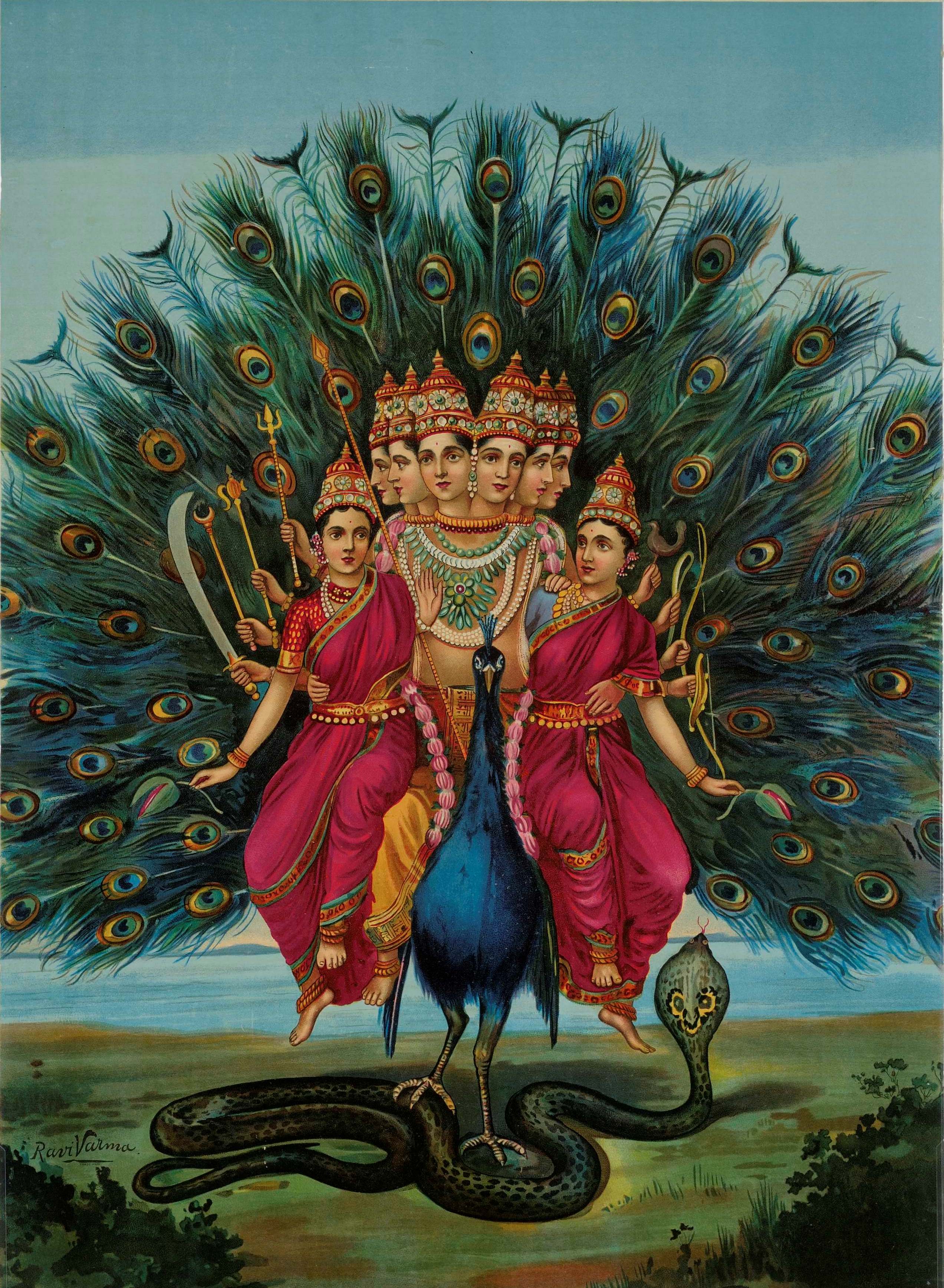
In the vast pantheon of Hindu deities, few figures embody the perfect synthesis of divine power and protective warfare as completely as Kartikeya. Known across the Indian subcontinent by multiple names—Skanda, Subrahmanya, Shanmukha, and Murugan—this elder son of Lord Shiva stands as the paramount Hindu god of war, commanding celestial armies in the eternal battle between cosmic order and chaotic forces.
The Divine Lineage: Origins of the War God
Kartikeya’s emergence represents a fascinating convergence of divine necessity and cosmic intervention. Born to Lord Shiva, the destroyer and transformer, and Goddess Parvati, the embodiment of divine feminine power, Kartikeya inherited the warrior essence of both parents. His younger brother Ganesha may be known as the remover of obstacles, but Kartikeya became the destroyer of enemies and protector of dharma.
The circumstances of his birth were extraordinary even by mythological standards. According to ancient texts, the demon Tarakasura had received a boon that only Shiva’s son could defeat him. This divine prophecy set the stage for Kartikeya’s miraculous birth, making him literally born for battle—a cosmic warrior whose very existence answered the universe’s call for justice.
The Miraculous Birth: From Divine Fire to Six-Headed Warrior
The name “Skanda” derives from the Sanskrit word meaning “spilled over,” referencing the extraordinary nature of his birth. Rather than conventional birth, Kartikeya emerged from divine fire, embodying the transformative power of his father Shiva. This fiery origin would later manifest in his role as a warrior capable of burning away cosmic evil.
Most remarkably, Kartikeya was born with six heads and twelve arms, earning him the name Shanmukha (“six-faced”). Each head represents vigilance in the six cardinal directions—north, south, east, west, above, and below—symbolizing his omnipresent awareness as a divine protector. This multifaceted appearance reflects the complexity of warfare itself: the need for strategic thinking, multiple perspectives, and comprehensive awareness of all potential threats.
The Celestial Arsenal: Weapons of Divine Justice
The Sacred Vel: Embodiment of Shakti
Kartikeya’s most iconic weapon is the Vel, a celestial spear gifted by his mother Parvati. This isn’t merely a physical weapon but the very embodiment of Shakti—divine feminine power transformed into an instrument of cosmic justice. The Vel represents focused divine energy, capable of piercing through illusion and destroying forces that threaten cosmic order.
The spear’s significance extends beyond its martial application. In Tamil tradition, the Vel symbolizes wisdom that cuts through ignorance, devotion that pierces the heart, and divine grace that removes obstacles from the spiritual path.
The Peacock Mount: Transformation Through Victory
Perhaps no aspect of Kartikeya’s iconography is more striking than his choice of mount—the magnificent peacock. This choice carries profound symbolic meaning rooted in his greatest victory. After defeating the demon Surapadma, rather than simply destroying his enemy, Kartikeya transformed the demon into a peacock, which became his vahana (divine vehicle).
This transformation represents the highest form of victory: not mere destruction, but the conversion of negative forces into vehicles of divine purpose. The peacock itself symbolizes beauty emerging from the consumption of poison (as peacocks eat snakes), representing the alchemical transformation of evil into good.
The Great Demon War: Cosmic Justice in Action
The Tarakasura Campaign
Kartikeya’s most legendary military campaign involved the defeat of Tarakasura, a powerful demon whose tyranny had thrown the cosmic order into chaos. The demon had gained immense power through severe penance, securing a boon that made him nearly invincible. However, the divine prophecy that only Shiva’s son could defeat him set the stage for Kartikeya’s destined role as cosmic liberator.
Leading an army of 30,000 divine warriors, Kartikeya demonstrated strategic brilliance combined with divine power. This wasn’t merely a battle of strength but a complex military campaign requiring leadership, tactical acumen, and the ability to inspire divine armies toward victory.
The Trilogy of Demon Brothers
Kartikeya’s campaign extended beyond Tarakasura to include his brothers Simhamukha and Surapadma, creating a cosmic war against a trinity of evil forces. Each victory demonstrated different aspects of divine warfare:
- Against Tarakasura: The fulfillment of cosmic prophecy and divine justice
- Against Simhamukha: The triumph of courage over bestial ignorance
- Against Surapadma: The ultimate transformation of enemy into ally
These victories established Kartikeya not just as a god of war, but as a deity of cosmic transformation and justice.
Regional Variations: A Pan-Indian Warrior Deity
South Indian Traditions: Murugan Worship
In Tamil Nadu and other South Indian states, Kartikeya is primarily known as Murugan, where his worship reaches extraordinary devotional heights. The six sacred abodes known as Arupadai Veedu serve as pilgrimage centers where millions of devotees seek his blessings for courage, victory over obstacles, and spiritual transformation.
The festival of Thaipusam celebrates the divine gifting of the Vel by Parvati, featuring elaborate processions and devotional practices that demonstrate the continuing relevance of Kartikeya’s warrior energy in contemporary spiritual life.
North Indian Traditions: Skanda and Mahasena
In North and East India, Kartikeya is revered as Skanda or Mahasena (“great army”), emphasizing his role as divine commander. The festival of Skanda Shashti commemorates his victory over Surapadma through six days of intensive worship, fasting, and mythological storytelling.
These regional variations demonstrate the universal appeal of Kartikeya’s warrior archetype while allowing for cultural adaptation and local devotional expressions.
Iconographic Elements: Symbolism in Divine Form
The Six Heads: Omnipresent Awareness
Kartikeya’s six heads represent more than physical multiplicity—they symbolize comprehensive awareness essential to effective leadership and protection. In warfare, both physical and spiritual, awareness in all directions prevents surprise attacks and ensures strategic advantage.
The Twelve Arms: Multifaceted Power
His twelve arms represent the ability to wield multiple weapons and protect devotees from various directions simultaneously. This iconographic element emphasizes that divine protection is comprehensive, addressing threats from all possible sources.
Youthful Appearance: Eternal Vigor
Despite being a god of war, Kartikeya is depicted as eternally youthful, representing the renewable nature of divine energy and the fresh perspective necessary for overcoming entrenched evil forces.
The Kaumaram Tradition: Institutionalized Worship
Kartikeya serves as the central deity of the Kaumaram tradition, one of the six major Hindu denominations. This tradition emphasizes the warrior path to enlightenment, viewing spiritual progress as a form of divine warfare against ignorance, ego, and material attachment.
Kaumaram temples across India serve as centers for both martial training and spiritual discipline, maintaining the connection between physical courage and spiritual transformation that Kartikeya embodies.
Philosophical Dimensions: War as Spiritual Metaphor
Dharma Yuddha: Righteous Warfare
Kartikeya’s battles represent the concept of dharma yuddha—righteous warfare conducted according to cosmic law. His victories demonstrate that true strength comes from alignment with divine will rather than mere physical power.
Internal Battles: Psychological Transformation
The demons Kartikeya defeats can be understood as representations of internal obstacles: Tarakasura as ego, Simhamukha as bestial instincts, and Surapadma as spiritual ignorance. His victories thus serve as templates for personal transformation and spiritual evolution.
Contemporary Relevance: The Eternal Warrior
Leadership Principles
Kartikeya’s example provides timeless leadership principles: comprehensive awareness, strategic thinking, the ability to transform enemies into allies, and the courage to face overwhelming odds when fighting for justice.
Spiritual Warfare
In contemporary spiritual practice, Kartikeya represents the warrior aspect of consciousness necessary for overcoming personal limitations, social injustices, and spiritual obstacles. His worship involves cultivating inner strength, moral courage, and the determination to fight for what is right.
Protection and Justice
As social and environmental challenges intensify, Kartikeya’s role as protector deity gains renewed significance. Devotees invoke his power not for conquest but for the strength to protect the vulnerable and defend cosmic order against forces of destruction.
Conclusion: The Enduring Legacy of the Divine Warrior
Kartikeya stands as perhaps the most complete representation of the warrior archetype in Hindu mythology—combining strategic intelligence, divine power, compassionate transformation, and unwavering commitment to cosmic justice. His story demonstrates that true warfare is not about destruction but about the courage to transform negative forces into vehicles of divine purpose.
As the Hindu god of war, Kartikeya continues to inspire millions of devotees who seek the strength to face life’s battles with divine grace, the wisdom to transform challenges into opportunities, and the courage to stand for justice in an often chaotic world. His six heads remind us to maintain awareness in all directions, his twelve arms assure us of divine protection, and his peacock mount demonstrates that even our greatest enemies can become our most beautiful vehicles for spiritual progress.
In Kartikeya, the ancient wisdom of Hindu mythology offers a warrior path that leads not to destruction but to transformation—not to conquest but to the victory of consciousness over ignorance, love over hatred, and cosmic order over chaos.
Leave a Reply