
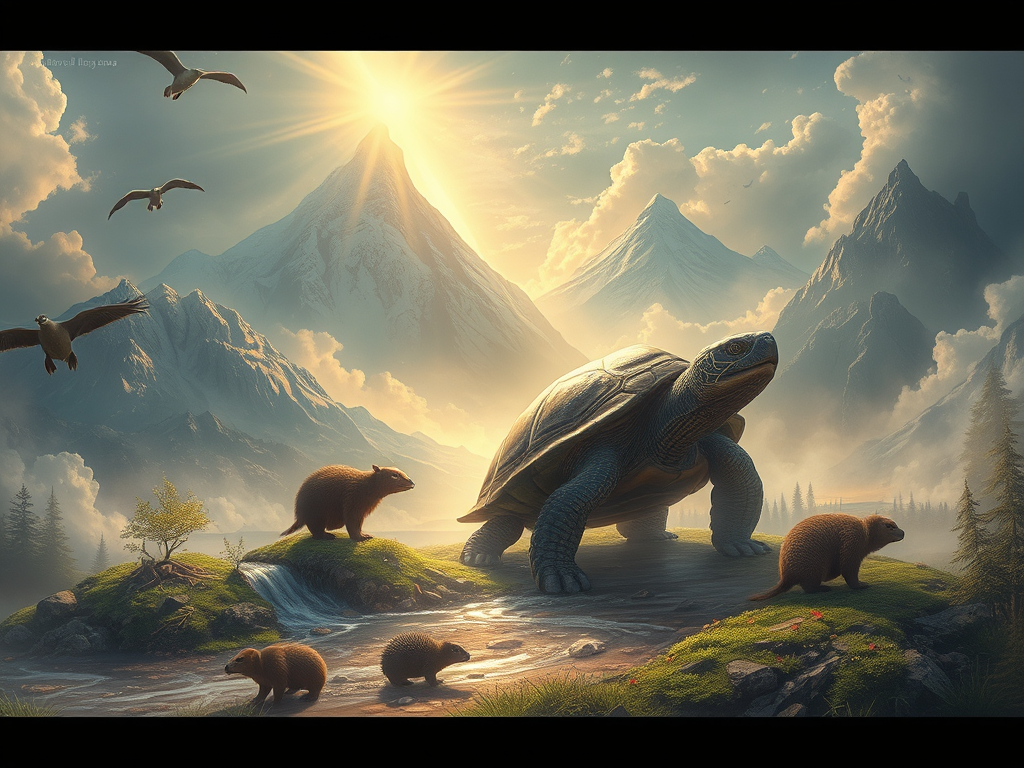
Long before the arrival of European explorers, the Americas were home to hundreds of diverse cultures, each with their own rich traditions of storytelling. From the icy landscapes of the Arctic to the lush Amazon rainforest, from the Great Plains to the towering peaks of the Andes, Indigenous peoples developed intricate mythologies that explained the world around them, taught moral lessons, and connected communities to the land they called home.
Unlike the more widely known Greek or Norse myths, American mythologies often emphasize a profound relationship between humans, animals, and nature itself. The Earth is not just a setting for these stories—it’s a living character, a sacred being deserving of respect and care. Gods take the form of animals, mountains breathe with spiritual energy, and the line between the physical and spiritual worlds is wonderfully thin.
This guide will take you on a journey through the major mythological traditions of North, Central, and South America, exploring creation stories, powerful deities, mystical creatures, and the timeless wisdom these ancient tales continue to offer.
The Beginning of Everything: Creation Stories
Every culture has asked the fundamental question: How did the world begin? The answers found in American mythologies are as diverse as the landscapes themselves.
North American Origins
The World on Turtle’s Back
One of the most beloved creation stories comes from the Ojibwe (Anishinaabe) people and other Great Lakes nations. In the beginning, there was only water—an endless ocean with no land in sight. The animals, needing a place to rest, decided someone must dive to the bottom and bring up earth.
One by one, they tried and failed. The mighty loon dove deep but returned empty-handed. The beaver tried but couldn’t reach the bottom. Finally, the humble muskrat volunteered. Though small, the muskrat dove deeper than anyone thought possible. When it finally surfaced, nearly lifeless, a tiny bit of mud was clutched in its paw.
This precious mud was placed on the back of a great turtle, who offered to carry it. Magically, the mud began to grow and spread, eventually becoming all of North America—which many Indigenous peoples still call Turtle Island.
The Navajo Journey Through Worlds
The Navajo (Diné) tell of a more complex emergence. Humanity didn’t start in this world at all—we climbed through multiple underworlds, each one teaching us important lessons. Guided by the Holy People, the first Navajo ascended through worlds of different colors, encountering challenges and learning the sacred ways before finally emerging into the present world through a reed or opening in the earth.
Sky Woman’s Fall
The Iroquois (Haudenosaunee) speak of Sky Woman, who lived in the world above the clouds. When she fell through a hole in the sky, water birds caught her and placed her gently on the back of a giant turtle. Other animals dove to bring up mud, which Sky Woman spread and danced upon, causing it to grow into the Earth. From seeds she brought from the sky world, all plants began to grow.
Central and South American Beginnings
The Five Suns of the Aztecs
The Aztec people of ancient Mexico believed the world had been created and destroyed four times before our current era. Each world, or “sun,” ended in catastrophe—by jaguars, hurricanes, fiery rain, and floods. We now live in the Fifth Sun, which required the ultimate sacrifice: the gods threw themselves into a great fire to set the sun in motion, and human offerings would be needed to keep it moving across the sky.
This dramatic cosmology reflected the Aztec understanding that existence itself required constant renewal and sacrifice—a cycle of destruction and rebirth.
Viracocha’s Creation
In the highlands of Peru, the Inca told of Viracocha, the creator god who emerged from the sacred waters of Lake Titicaca. In the darkness before time, Viracocha created the sun, moon, and stars to bring light to the world. Then he formed the first humans from stone, breathing life into them and teaching them language, customs, and how to live in harmony with the land.
The Maya and the Gift of Maize
The Maya believed the gods experimented before getting humans right. First, they made people from mud, but they fell apart in the rain. Next came wooden people, but they had no hearts or minds and couldn’t properly honor the gods. Finally, the gods ground white and yellow maize (corn) into a dough and shaped humanity from this sacred grain. These maize people could think, speak, and give thanks—and they became the ancestors of all Maya.
This origin story explains why corn remains so central to Maya culture: humans are literally made from it, bound to this plant in body and spirit.
The Divine Powers: Gods and Goddesses
Northern Spirits and Holy People
Indigenous North American traditions often speak of spiritual forces rather than gods in the Greek or Roman sense. These beings are deeply connected to natural phenomena and the land itself.
The Great Spirit and Sacred Powers
Many Plains nations, including the Lakota, recognize Wakan Tanka (the Great Spirit or Great Mystery), an all-encompassing sacred power that flows through everything. This isn’t a single god but rather the totality of all spiritual forces working together.
Alongside Wakan Tanka, trickster spirits like Iktomi the spider teach lessons through their often foolish and selfish behavior, showing people what not to do while occasionally stumbling into helpful discoveries.
Changing Woman and the Holy People
For the Navajo, Changing Woman is among the most beloved deities. She represents the cycle of life and the seasons, growing old and then young again in an eternal pattern. She gave birth to the Hero Twins, who would go on to slay monsters and make the world safe for humans.
The Navajo also speak of numerous Holy People—sacred beings who taught ceremonies, created natural features, and continue to influence the world when properly honored.
Sedna, Ruler of the Sea
In the frozen Arctic, Inuit peoples tell stories of Sedna, the powerful and sometimes vengeful goddess of the sea. According to legend, she was once a girl whose father threw her from his kayak during a storm. As she clung to the boat, he cut off her fingers, which transformed into seals, whales, and walruses—all the sea mammals that Inuit hunters depend upon.
Sedna lives at the bottom of the ocean, and when hunters break taboos or show disrespect, she withholds the animals. Shamans must journey to her realm to comb her hair (which she cannot do herself, having no fingers) and plead for the animals’ return.
Mesoamerican Pantheons
The civilizations of Mexico and Central America developed complex pantheons with gods governing every aspect of life.
Quetzalcoatl, the Feathered Serpent
Perhaps the most famous Mesoamerican deity, Quetzalcoatl appears in both Aztec and Maya traditions (where he’s called Kukulkan). Part bird, part snake, he represents the union of earth and sky. Quetzalcoatl is associated with wind, learning, arts, and the morning star.
In some stories, he descended to the underworld to retrieve the bones of previous humans and mixed them with his own blood to create the current generation of humanity. He taught people agriculture, calendars, and crafts, making him a true culture hero.
Tezcatlipoca, the Smoking Mirror
The eternal rival of Quetzalcoatl, Tezcatlipoca was the Aztec god of night, sorcery, destiny, and conflict. His obsidian mirror could see everything, including human hearts. Unpredictable and powerful, he represented the darker, more chaotic aspects of existence. The two gods’ conflicts helped shape and reshape the world through the ages.
Huitzilopochtli, God of Sun and War
For the Aztec, Huitzilopochtli was the patron deity of their capital city, Tenochtitlan. As the god of the sun and war, he required blood offerings to maintain his strength and keep the sun moving across the sky. This belief drove the Aztec practice of ritual sacrifice—a controversial but deeply important religious practice in their worldview.
Itzamna and Ix Chel
The Maya honored Itzamna as the supreme creator, lord of the heavens and bringer of culture. His consort, Ix Chel, was the goddess of the moon, medicine, childbirth, and weaving. Together they represented the cosmic balance necessary for life to flourish.
Andean Divinities
Inti, the Golden Sun
The Inca Empire was built around the worship of Inti, the sun god. The Sapa Inca (emperor) was believed to be Inti’s direct descendant, giving him divine authority to rule. Massive temples plated with gold—metal of the sun—were built in Inti’s honor, and the great festival of Inti Raymi celebrated the winter solstice when the sun returned its strengthening light to the southern hemisphere.
Mama Killa, the Silver Moon
Mama Killa, the moon goddess, was Inti’s sister and wife. She governed the passage of time and the calendar, particularly important for agricultural societies that needed to track planting and harvest seasons. Her silver tears were said to create rain.
Pachamama, the Earth Mother
Even today, Pachamama remains one of the most honored deities in Andean culture. She is Mother Earth herself—the ground beneath your feet, the mountains, the soil that grows crops. Before planting or harvesting, people offer her coca leaves, chicha (corn beer), or food, thanking her for her generosity and asking for her continued blessings.
Disrespecting Pachamama by overharvesting, polluting, or taking without giving back can bring drought, earthquakes, and hardship.
Viracocha, the Creator
As mentioned earlier, Viracocha was the Inca creator god, though worship of him was more abstract compared to the direct, daily reverence shown to Inti or Pachamama. He was the architect of reality itself, setting everything in motion before departing, promising to return one day.
Creatures of Wonder and Terror
American mythologies teem with creatures that are sometimes helpful, sometimes dangerous, and always fascinating.
Tricksters: Teachers Through Chaos
Coyote is one of the most widespread trickster figures, appearing in countless stories from the Navajo, Nez Perce, and other southwestern and plains nations. Clever but often undone by his own greed or arrogance, Coyote inadvertently creates important features of the world. He might steal fire for humans but burn his tail in the process. He teaches through negative example: when Coyote acts selfishly and suffers for it, listeners learn what not to do.
Raven plays a similar role in Pacific Northwest cultures. Raven is credited with releasing the sun from a box where it was hidden, bringing light to the world—though he did it through trickery rather than nobility. He’s intelligent, curious, and always hungry, representing both the creative and destructive forces of nature.
Iktomi the spider appears in Lakota stories as a schemer who uses his cunning to deceive others, often with humorous results. Like other tricksters, he embodies humanity’s flaws while occasionally stumbling into beneficial deeds.
The Mighty Thunderbird
Across many North American cultures, the Thunderbird is a colossal bird whose wingbeats create thunder and whose eyes flash with lightning. It brings storms and rain, essential for crops but dangerous when angered. In Pacific Northwest art, the Thunderbird is depicted with massive wings and a hooked beak, often locked in eternal battle with water serpents or sea monsters.
The Dreaded Wendigo
From Algonquian-speaking peoples comes the terrifying Wendigo—a once-human creature transformed by greed, cannibalism, or dark magic into a gaunt, ice-cold monster with an insatiable hunger. The Wendigo represents the dangers of selfishness and excess, particularly in harsh winter environments where survival depended on community cooperation and sharing resources.
To become “Wendigo-like” meant to place your own survival above others’, breaking the social bonds essential to group survival. The Wendigo legend served as a powerful deterrent against such behavior.
Shapeshifters and Guardians
Naguals and Uays in Mesoamerican traditions are spiritual doubles or shapeshifting sorcerers who can transform into their animal forms, usually jaguars, eagles, or other powerful creatures. Every person has a nagual animal companion, and powerful shamans can consciously take their animal form.
The Aztec Ahuizotl was a fearsome water monster with a hand at the end of its tail, which it used to drag unwary swimmers to their doom. This legend likely served as a warning about dangerous waters and flooding.
In the Amazon, the Chullachaqui is a forest spirit that protects the jungle. It can shapeshift to look like someone you know, leading travelers deep into the forest where they become lost. One telltale sign: the Chullachaqui has one normal human foot and one animal foot, usually a hoof.
The Maya tell of the Alux (plural: Aluxob), small beings similar to elves or brownies that guard fields and forests. Farmers often build tiny houses for them and leave offerings. Treat an Alux well, and it will protect your crops; ignore or insult it, and expect mischief and poor harvests.
Realms Beyond: The Underworld and Afterlife
Death wasn’t the end in these mythologies, but rather a transition to other realms.
Mictlan: The Aztec Land of the Dead
When most Aztecs died (except warriors, sacrifice victims, and women who died in childbirth, who went to paradise), their souls embarked on a treacherous four-year journey to Mictlan, the underworld ruled by Mictlantecuhtli and his wife Mictecacihuatl (the Lady of the Dead, still honored during Day of the Dead celebrations).
The journey required passing through nine levels, facing challenges like crossing a raging river, navigating between clashing mountains, and enduring freezing winds that cut like obsidian knives. Only after completing this ordeal could the soul finally rest.
Xibalba: The Maya Underworld of Tests
The Maya Xibalba (Place of Fear) was ruled by death gods who delighted in tormenting souls with tricks and challenges. The famous Hero Twins of Maya mythology traveled to Xibalba to avenge their father, defeating the death lords through cleverness and skill in the ballgame, ultimately transforming into the sun and moon.
Xibalba wasn’t necessarily a place of punishment—it was simply where the dead resided, though it was full of dangers and tests.
Navajo Beliefs
The Navajo maintain strong taboos around death and the dead. The spirits of the deceased travel to the land of the Holy People, but there’s danger in the ghost or chindi that may linger. Proper ceremonies must be performed to help the deceased journey safely and to protect the living from spiritual contamination.
Inca Afterlife
The Inca divided the cosmos into three realms: Hanan Pacha (upper world of the gods), Kay Pacha (the earthly world), and Uca Pacha (the inner world below). The righteous dead would ascend to live with Inti in the warmth and light, while wrongdoers remained in the cold darkness below ground.
Heroes and Culture Bringers
Northern Champions
Glooscap (or Gluskabe) is the culture hero of Wabanaki peoples in the northeastern woodlands. This giant being shaped the landscape—creating rivers by dragging his canoe, forming mountains by piling rocks—and taught humans how to hunt, fish, and live well. He defeated monsters and established order, then departed but promised to return when his people needed him most.
Raven, beyond his trickster aspects, is also credited with fundamental acts of creation in the Pacific Northwest, such as releasing salmon into rivers and placing the sun, moon, and stars in the sky.
The Hero Twins
In the Maya sacred text, the Popol Vuh, the Hero Twins Hunahpu and Xbalanque are summoned to Xibalba by the death gods to play the sacred ballgame. Through wit, skill, and magical transformations, they defeat the lords of death, are reborn, and ascend to become the sun and moon. Their story emphasizes cleverness over brute strength and the triumph of life over death.
Founders and Civilizers
Quetzalcoatl, mentioned earlier, is not just a god but also appears as a culture hero who taught humans essential skills like agriculture, architecture, and the calendar. Some traditions describe him as a priest-king who ruled wisely before departing across the sea, promising to return.
For the Inca, Manco Cápac and Mama Ocllo were the founding couple who emerged from Lake Titicaca, sent by Inti to civilize humanity. They carried a golden staff and were told to settle where it sank into the earth—the site that would become Cusco, capital of the Inca Empire.
Sacred Landscapes: Where Heaven Touches Earth
These mythologies are inseparable from the physical landscapes they describe. Mountains aren’t just geology—they’re sleeping gods. Lakes aren’t just water—they’re doorways to other realms.
Mountains and Peaks
For the Inca, mountains (called Apus) are divine beings that watch over communities. The snow-capped peaks are particularly sacred, closest to the gods. Machu Picchu, built high in the Andes, served as both a retreat for nobles and a sacred site aligned with astronomical events.
The Navajo have four sacred mountains marking the boundaries of their homeland, each associated with a direction, color, and sacred stone.
Waters and Rivers
Lake Titicaca, the highest navigable lake in the world, is where Viracocha created the sun and where the Inca founders emerged. Its deep blue waters remain sacred to Andean peoples today.
Rivers often mark boundaries between the living world and the realm of spirits. Crossing water can mean crossing into danger or into sacred space.
Ceremonial Centers
Cahokia in present-day Illinois was the largest city north of Mexico before Columbus, with enormous earthen mounds including Monks Mound, which covers more area than the Great Pyramid of Giza. These weren’t just buildings but cosmic diagrams, connecting earth to sky.
Chichen Itza and Teotihuacan in Mexico, Machu Picchu and Sacsayhuamán in Peru—these incredible sites weren’t mere cities but carefully designed sacred landscapes where humans could communicate with the divine.
Totem Poles
In the Pacific Northwest, carved cedar totem poles serve as family histories, territorial markers, and spiritual statements. Each figure—Raven, Bear, Killer Whale, Eagle—represents clans, stories, and relationships between humans and the spirit world.
Living Traditions: Rituals and Celebrations
These mythologies weren’t just stories told around fires—they were lived through ceremonies and festivals that connected communities across time.
Sun Dance
Among Plains peoples, the Sun Dance is one of the most sacred ceremonies, held in summer to honor the Creator, renew the earth, and allow individuals to seek visions. Participants fast and dance for days, sometimes piercing their skin as a sacrifice and form of prayer, demonstrating their commitment to the community’s wellbeing.
Inti Raymi
The Inca Inti Raymi (Festival of the Sun) celebrated the winter solstice in June (in the southern hemisphere), marking the sun’s return and renewal. Held in Cusco’s main plaza, this elaborate ceremony involved sacrifices, feasting, and ritual performances. Today, it’s still celebrated as a major cultural event in Peru.
Potlatch
In Pacific Northwest cultures, the Potlatch ceremony involves gifting and feasting to mark important events like births, deaths, marriages, or the raising of a totem pole. The host gives away significant wealth—blankets, food, coppers—demonstrating generosity and earning prestige. Colonial governments once banned potlatches, fearing they undermined capitalism, but they remain important cultural celebrations today.
Day of the Dead
While now associated with Mexican Catholicism, Día de los Muertos has deep roots in Aztec celebrations of the dead, particularly honoring Mictecacihuatl. Families create altars (ofrendas) with photos, favorite foods, marigolds, and candles to welcome deceased loved ones back for a joyful reunion. It’s not a somber occasion but a vibrant celebration of memory and continued connection.
Wisdom of the Ancestors: Core Values and Teachings
Beyond entertainment, these myths conveyed essential values and practical wisdom:
Respect for Nature
Again and again, these stories emphasize that nature is alive and aware. Mountains have spirits. Rivers can hear you. Animals are people in other forms. This worldview naturally leads to conservation and respect—you don’t thoughtlessly destroy beings you recognize as relatives.
Balance and Reciprocity
Nothing comes without giving something back. Hunters thank the animal for its sacrifice and use every part. Farmers offer the first fruits to Pachamama. This principle of reciprocity—of give and take—maintains cosmic balance.
Humility and Humor
Trickster tales remind people not to take themselves too seriously. Coyote’s constant failures show that everyone makes mistakes. Iktomi’s schemes backfire hilariously. These stories teach humility through laughter.
Community Over Individual
Many myths emphasize collective survival over individual glory. The Wendigo legend warns against selfishness in harsh times. Potlatch ceremonies celebrate generosity. Heroes often succeed through cooperation rather than lone achievement.
Courage and Cleverness
From the Hero Twins to Raven, protagonists win through intelligence, creativity, and adaptability. Brute force alone rarely succeeds—you must outwit your opponents, adapt to circumstances, and sometimes laugh at yourself along the way.
Honoring Ancestors
The past isn’t dead and gone—ancestors remain present, offering guidance and requiring respect. Stories keep their memories and wisdom alive across generations.
Modern Echoes: Living Mythologies
Despite centuries of colonization, forced assimilation, and cultural suppression, these mythological traditions survive and thrive.
Cultural Resurgence
Indigenous communities throughout the Americas are reclaiming and revitalizing their languages, ceremonies, and stories. Powwows, language immersion schools, and cultural centers ensure these traditions pass to new generations.
Arts and Media
Native artists, writers, and filmmakers are sharing these stories on their own terms. Authors like Leslie Marmon Silko, Louise Erdrich, and Tommy Orange weave traditional stories into contemporary novels. Artists like Jaime Hernandez and Jeffrey Veregge blend traditional imagery with modern styles.
Environmental Movement
The Indigenous emphasis on environmental stewardship has gained wider recognition. Concepts like the Rights of Nature and treating Pachamama with respect have influenced environmental law and activism worldwide. The Standing Rock protests against pipeline construction explicitly drew on traditional values about protecting water.
Global Recognition
Day of the Dead has become internationally celebrated. Inca sites like Machu Picchu attract millions of visitors. Museums worldwide host exhibitions on Maya, Aztec, and other American civilizations. While this visibility has benefits, Indigenous communities rightfully insist on accurate representation and respect for the sacred aspects of their traditions.
Conclusion: Stories That Still Speak
The mythologies of North, Central, and South America offer us far more than colorful characters and entertaining tales. They present alternative ways of understanding our relationship with the natural world, our responsibilities to community, and what it means to live a balanced, meaningful life.
In a time of environmental crisis, the Indigenous emphasis on respecting and reciprocating with nature feels urgently relevant. In an age of individualism, the communal values in these stories offer a different path. In our disconnection from place, the sacred geography of these traditions reminds us that where we live matters.
These aren’t dead mythologies preserved in books—they’re living traditions carried by real communities who continue to honor these stories, spirits, and values. They’ve survived conquest, disease, and systematic cultural destruction. Their persistence testifies to their power and truth.
Whether you’re drawn to the clever chaos of Coyote, the cosmic drama of the Hero Twins, the nurturing power of Changing Woman, or the earth-centered wisdom of Pachamama, there’s something in these American mythologies that speaks to universal human experiences while offering perspectives you won’t find in more familiar Greek or Norse traditions.
These stories invite us to listen—to the land, to the ancestors, to the spirits that move through all things. In doing so, we might just rediscover wisdom our own cultures have forgotten, wisdom we need now more than ever.
The stories continue. The spirits remain. The land remembers. And if we listen carefully, we might hear what they have to teach us.
Leave a Reply