
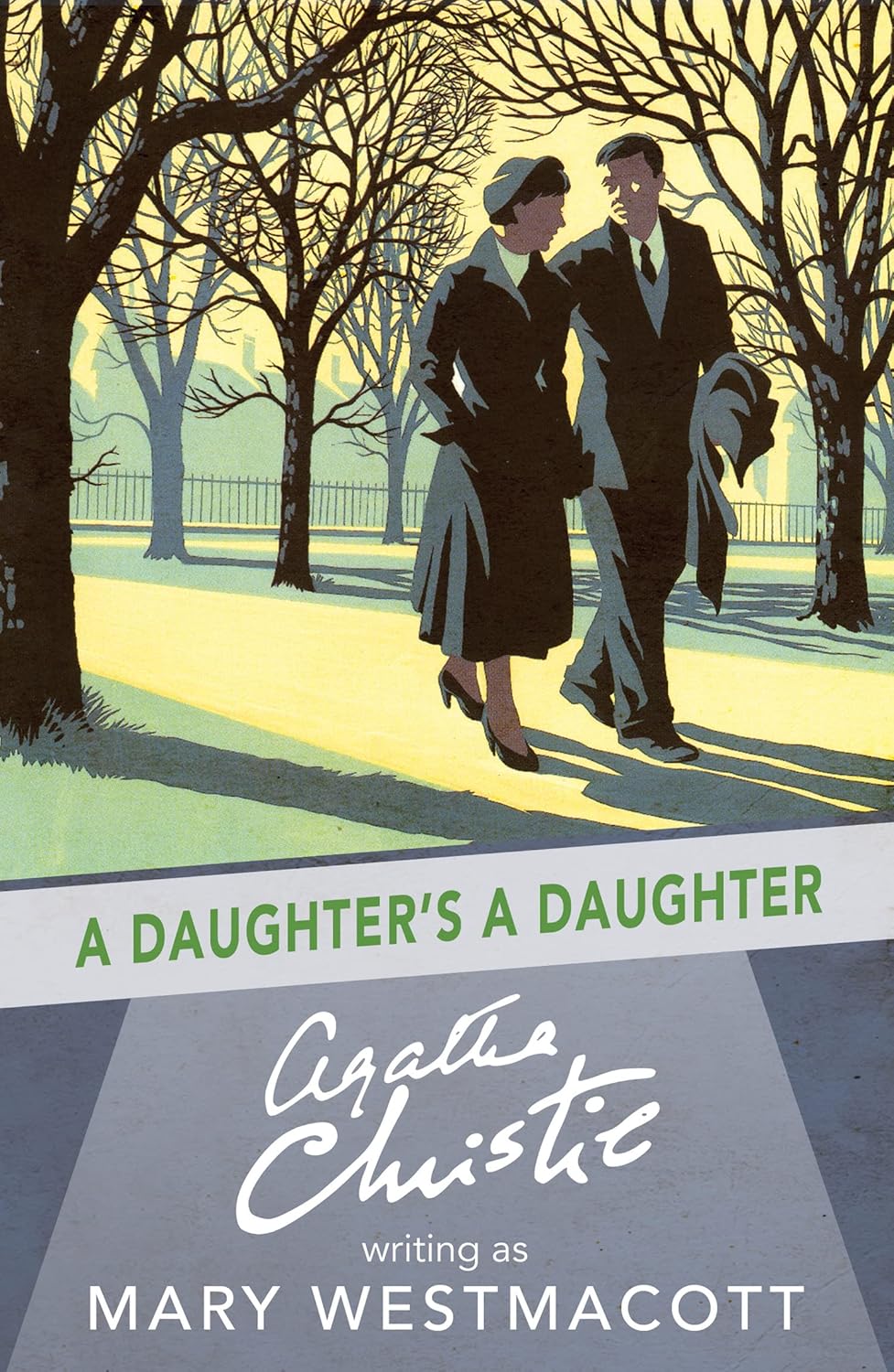
You know that saying about how a son is a son until he gets a wife, but a daughter is a daughter all her life? Well, Marry Wesmacot’s “Daughter’s Daughter” takes that age-old wisdom and runs it through an emotional blender, serving up a story that’s equal parts heartbreaking and infuriating—in the best possible way.
Here’s the thing about pen names—they’re supposed to give authors freedom to explore different territories. When you discover that Marry Wesmacot is actually the beloved mystery maven herself, you might expect something completely divorced from her usual psychological precision. But surprise! While “Daughter’s Daughter” trades murder mysteries for family drama, Wesmacot’s razor-sharp character insights and her uncanny ability to crawl inside someone’s head and set up camp there? That’s all still gloriously present.
The Mother-Daughter Tango
At its core, this novel is about the intricate dance between a mother and daughter, complete with all the stepping on toes you’d expect. Our story kicks off with a mother who finds herself smitten—properly, butterflies-in-the-stomach smitten—with a man she wants to marry. Wesmacot doesn’t just tell us about this romance; she makes us feel the mother’s giddy anticipation, the way hope can make even mundane Tuesday afternoons shimmer with possibility.
Enter stage left: the daughter, and oh, what a character she is. This isn’t your garden-variety disapproving offspring. Wesmacot crafts her as a master manipulator who wields guilt, criticism, and emotional blackmail with surgical precision. She doesn’t just dislike her mother’s beau—she orchestrates a campaign of psychological warfare that would make generals weep with envy. Every dinner conversation becomes a minefield, every family gathering an opportunity to undermine and destabilize.
What’s brilliant about Wesmacot’s characterization is how she shows us the daughter’s motivations without ever excusing her behavior. We see the fear lurking beneath the interference—the terror of being abandoned, of losing her mother’s attention, of having to share the spotlight. It’s selfish and destructive, but it’s also achingly human.
The daughter’s interference is so thorough, so relentlessly effective, that the mother eventually waves the white flag and breaks things off with her potential husband. And here’s where Wesmacot’s emotional excavation really shines—the mother’s heartbreak isn’t just mentioned, it’s anatomized. We witness her trying to convince herself she’s doing the right thing, the way she practices casual indifference in the mirror, the hollow ache that settles in her chest when she realizes her chance at companionship has been sacrificed on the altar of family peace.
Meanwhile, the daughter remains blissfully, maddeningly oblivious to the wreckage she’s caused. Wesmacot captures this selective blindness with devastating accuracy—the way people can orchestrate someone else’s misery and then genuinely not understand why that person seems sad.
The Karma Express
But oh, how the tables turn. Our meddling daughter goes and falls for exactly the wrong kind of guy—you know the type, the one who probably has “red flag” tattooed somewhere visible. Here’s where Wesmacot’s character work gets really interesting. The daughter, who was so perceptive about her mother’s relationship flaws (real or imagined), becomes absolutely blind to her own romantic disaster.
Wesmacot doesn’t just make this guy obviously awful—that would be too easy. Instead, she shows us how someone can be charming and attentive in all the right moments while being fundamentally wrong in all the ways that matter. We see him through the daughter’s love-drunk eyes, and we understand exactly why she’s fallen so hard and so foolishly.
The mother, fresh from her own romantic disappointment and newly educated in the art of relationship interference, tries to return the favor by talking her daughter out of this disaster-in-waiting. But Wesmacot shows us something fascinating here—the mother’s heart isn’t really in it. She’s going through the motions of maternal concern, but there’s a part of her that’s almost curious to see her daughter learn this lesson the hard way. It’s not malicious, exactly, but it’s not entirely altruistic either.
The daughter, displaying the kind of selective hearing that would make teenagers everywhere proud, marches down the aisle anyway. Wesmacot’s depiction of this wedding is masterful—all the surface joy and celebration while undertones of dread hum beneath every congratulation. The mother watches her daughter make what she knows is a mistake, and we feel her complex mixture of sorrow, frustration, and yes, just a tiny bit of vindication.
Spoiler alert: it goes about as well as you’d expect. But Wesmacot doesn’t just tell us the marriage fails—she shows us how it crumbles, piece by painful piece. The daughter’s dawning realization that she’s trapped herself, the slow erosion of her confidence, the way disappointment curdles into resentment. Misery ensues, complete with all the “I told you so” moments that the mother is too gracious (and too aware of her own glass house) to actually voice.
The Blame Game Championship
Here’s where things get really juicy, and where you can really see that famous psychological insight at work. When the daughter’s marriage predictably implodes, she does what we all do when life goes sideways—she looks for someone to blame. And who better than dear old mom?
But Wesmacot doesn’t just have the daughter point fingers and storm off. She dives deep into the psychology of blame, showing us how the daughter reconstructs history to make her mother the villain of her story. Every past conversation gets reinterpreted, every piece of maternal advice gets reframed as manipulation. It’s a masterclass in self-deception, and Wesmacot presents it with the kind of clinical precision that makes you squirm with recognition.
The accusation flies: it’s all mother’s fault that daughter’s life is such a mess. The daughter has convinced herself that if only her mother had been more supportive, more understanding, more something, then everything would have turned out differently. It’s the kind of reasoning that’s simultaneously completely illogical and absolutely believable.
But Wesmacot doesn’t let this slide. In what might be the most satisfying literary mic-drop of the year, the mother finally finds her voice. She doesn’t explode or rage—that’s not her style. Instead, she serves up some uncomfortable truth with surgical precision: “Remember when you destroyed my chance at happiness? Yeah, that was a thing that happened.”
The confrontation scene is electric. Two women, each carrying years of resentment, finally laying their cards on the table. Wesmacot captures the way long-suppressed anger can erupt, but also the way it can clear the air like a thunderstorm. Both characters reveal depths we hadn’t fully seen before—the mother’s buried fury at having her life dictated by her daughter’s tantrums, the daughter’s genuine confusion about how her protective instincts became destructive weapons.
The Wisdom That Sticks
Beyond the family drama (which, let’s be honest, is deliciously addictive), Wesmacot drops some philosophical gems that’ll have you staring at the ceiling at 2 AM. The idea that we all ultimately live our lives alone—that despite being surrounded by people, we’re the only constant in our own stories—hits differently when wrapped in this narrative.
And then there’s this intriguing concept: a month-long desert meditation retreat where your only companions are silence and your own thoughts. No books, no notebooks, no Netflix to distract from the uncomfortable business of being alone with yourself. It sounds simultaneously terrifying and liberating—the kind of thing you bookmark in your brain for “someday when I’m brave enough.”
The Reconciliation Dance
The beauty of “Daughter’s Daughter” lies not just in its unflinching look at how we hurt the people we love most, but in its ultimate message of reconciliation. These two women, after inflicting considerable emotional damage on each other, somehow find their way back to each other. It’s not a neat, Hollywood-style resolution—it’s messier and more real than that.
What’s remarkable is how Wesmacot shows us the process of forgiveness without making it feel forced or unearned. The reconciliation doesn’t happen because someone delivers a pretty speech about family being everything. It happens because both women finally see each other clearly—not as the idealized or demonized versions they’ve been carrying around, but as flawed, frightened, loving human beings who’ve been stumbling around in the dark, trying to protect themselves and each other in all the wrong ways.
The mother finally understands that her daughter’s interference came from a place of fear, not malice. The daughter finally sees that her mother is a person with her own needs and desires, not just a supporting character in the story of her life. It’s the kind of recognition that can only come after you’ve hurt each other badly enough to strip away all the pretenses.
Wesmacot understands that forgiveness isn’t about forgetting or pretending the hurt never happened. It’s about acknowledging the damage, owning your part in it, and choosing to love anyway. It’s about recognizing that the people who drive us most crazy are often the ones we can’t imagine living without. The final scenes between mother and daughter are tender without being saccharine, hopeful without being naive.
Final Verdict
“Daughter’s Daughter” is the kind of book that’ll make you want to call your own mother—whether to apologize, argue, or just hear her voice. It’s a reminder that family relationships are beautifully, frustratingly complicated, and that sometimes the people who love us most are the ones who interfere with our lives the most spectacularly.
What’s particularly impressive is how Wesmacot has managed to write something so different from her usual fare while still maintaining that signature ability to dissect human psychology with the precision of a master surgeon. The murder mysteries may be gone, but that keen understanding of how people tick, how they justify their actions to themselves, how they construct their own versions of reality—that’s all still there, just applied to the quieter but no less deadly battleground of family dynamics.
Wesmacot has crafted a story that’s both specific in its details and universal in its themes. It’s about the ways we protect and sabotage each other, often simultaneously. It’s about the price of meddling and the cost of independence. Most importantly, it’s about the long, winding road back to each other when we’ve both been wrong.
The characters drive every moment of this story—not plot devices or convenient coincidences, but real people making real (if sometimes spectacularly bad) decisions based on their fears, desires, and blindnesses. You’ll recognize these women, maybe uncomfortably so. You might even see yourself in their mistakes, their justifications, their eventual grace.
Pick this one up if you’re ready for a story that doesn’t shy away from the messy realities of love, family, and the fine art of forgiveness. Just maybe have some tissues handy—and perhaps your phone, in case you feel the sudden urge to call your mom.
Leave a Reply