
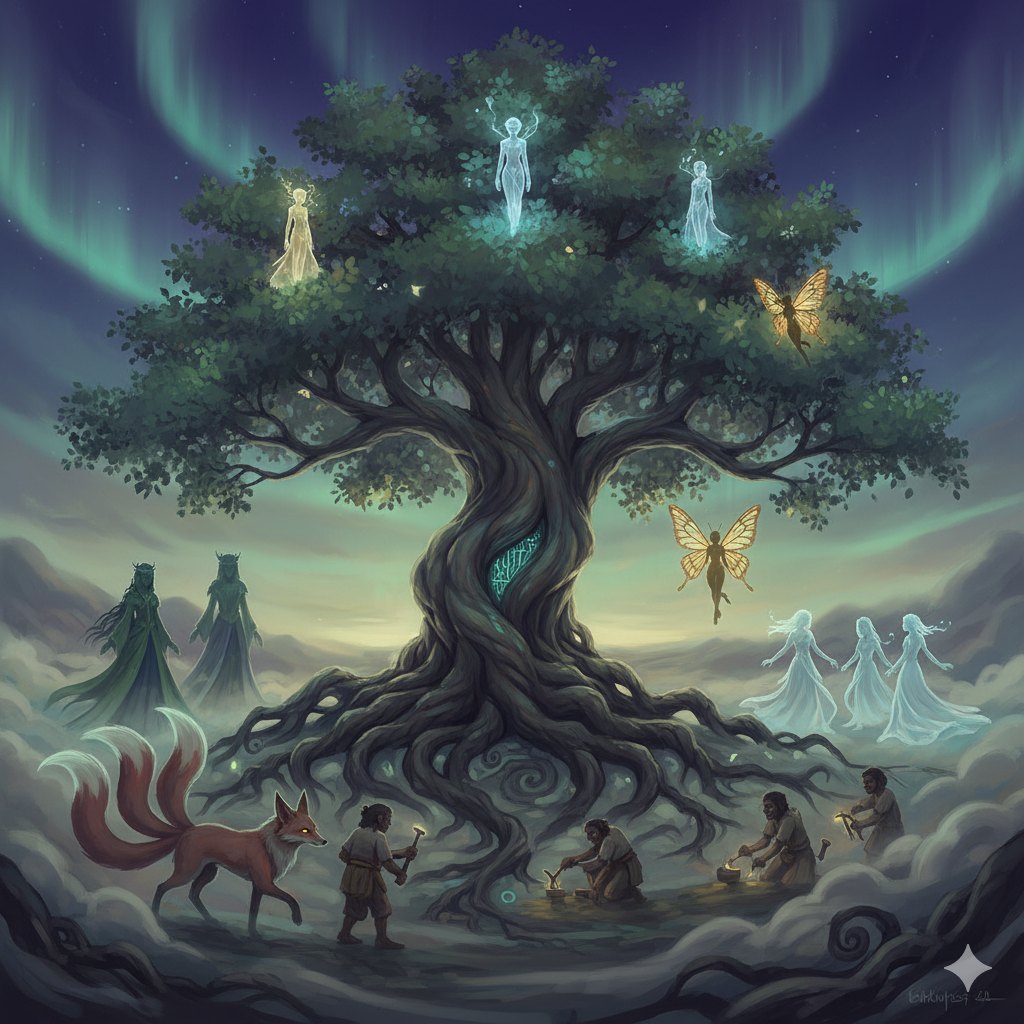
The concept of fairies transcends cultural boundaries, appearing in folklore across virtually every civilization throughout human history. While the term “fairy” itself originates from European languages, similar supernatural beings populate mythologies worldwide—nature spirits, tricksters, guardians, and intermediaries between mortal and divine realms. These entities serve remarkably similar functions across disparate cultures: explaining natural phenomena, enforcing moral behavior, teaching respect for the environment, and providing a sense of wonder in human experience.
What emerges from examining these traditions is not merely a collection of charming folklore, but a profound insight into how different societies understand their relationship with the natural world and the unseen forces that inhabit it.
The Celtic Foundations: Ireland, Scotland, and Wales
The richest and most influential fairy traditions emerge from Celtic lands, where these beings are taken with utmost seriousness. The Irish Sidhe (pronounced “shee”) represent perhaps the most sophisticated fairy mythology in the world. These are not the diminutive, winged creatures popularized by Victorian artists, but human-sized or larger entities of considerable power and dignity.
According to Irish tradition, the Sidhe descended from the Tuatha Dé Danann, an ancient race of gods who once ruled Ireland. When they were displaced by the arriving Milesians, they retreated into hollow hills and earthen mounds, establishing an invisible kingdom that exists parallel to our own. These beings command both respect and fear—they possess the power to bless or curse, heal or harm, and their favor should never be taken for granted.
The Diverse Inhabitants of Celtic Fairy Realms
Irish folklore catalogues numerous types of fairy beings, each with distinct characteristics and behaviors. The Banshee (bean-sidhe, literally “woman of the fairy mound”) serves as a harbinger of death, her keening wail foretelling mortality in noble Irish families. The Leprechaun, contrary to modern commercialized depictions, is a solitary shoemaker who guards hidden treasures with cunning and mischief.
The Pooka represents the more dangerous aspects of fairy nature—a shape-shifting entity that most commonly appears as a black horse, capable of carrying riders on terrifying nocturnal journeys. Even more fearsome is the Dullahan, a headless horseman who rides through the night, stopping at homes where someone is about to die and calling out their name.
The Leanan Sidhe embodies the romantic yet destructive relationship between the fairy realm and human creativity. This “fairy lover” inspires poets and artists with divine talent, but slowly drains their life force in exchange—a metaphor, perhaps, for the consuming nature of artistic obsession.
The Courts of Light and Shadow
Celtic tradition divides the fairy world into two courts: the Seelie Court and the Unseelie Court. The Seelie, whose name derives from the word “blessed,” are generally benevolent toward humans. They return kindness with kindness, help those who respect them, and maintain a certain code of honor. However, they can become dangerous when offended or disrespected—benevolence should never be mistaken for weakness.
The Unseelie Court represents the malevolent aspects of fairy nature. These beings attack without provocation, delight in causing harm, and align themselves with darker supernatural forces. They embody the chaotic and dangerous aspects of the natural world—storms, disease, accidents, and inexplicable misfortune.
Other notable Celtic fairies include Brownies, helpful household spirits who perform domestic chores at night in exchange for small offerings of food and milk, and Pixies, small winged creatures with pointed ears known for leading travelers astray with mischievous pranks.
Slavic Spirits: The Vila and Water Nymphs
Slavic mythology features its own rich tradition of fairy-like beings, most notably the Vila (known as Samodiva in Bulgarian tradition). These entities appear as beautiful, eternally young women with flowing blonde hair, dressed in white garments, and possessing supernatural wings that enable flight. They inhabit clouds, mountains, forests, and waters—liminal spaces between earth and sky, civilization and wilderness.
The Vila possess formidable powers: they can transform into horses, wolves, snakes, and birds; they control storms and winds; they possess knowledge of healing herbs and magical incantations. As protectors of forests and wildlife, they help humans who respect nature but punish those who harm it. A hunter who kills unnecessarily or a woodsman who cuts sacred trees may find himself cursed by Vila, led astray in forests he thought he knew, or afflicted with mysterious illnesses.
The Melancholic Rusalki
The Rusalka represents a more sorrowful aspect of Slavic fairy lore. These water nymphs are the spirits of young women who died violently or prematurely—particularly those who drowned or took their own lives. They inhabit rivers, lakes, and streams, appearing as beautiful young women with long flowing hair and pale skin.
Rusalki are considered dangerous, associated with what Slavic tradition calls the “unclean dead”—those who died without proper rites or before their natural time. They lure men into water to drown them, or dance them to exhaustion on riverbanks. Yet their actions stem not from malice but from their own tragic circumstances, forever bound to watery graves, seeking the life and love denied to them.
Norse Mythology: The Radiant Elves and Underground Craftsmen
Norse tradition distinguishes between two fundamentally different types of fairy beings. The Ljósálfar (Light Elves) dwell in Álfheimr, a luminous realm positioned close to the divine halls of Asgard. Ancient texts describe them as “fairer than the sun to look at”—radiant beings of light and beauty who assist the gods in their pursuits and maintain generally benevolent relationships with mortals.
The Dökkálfar (Dark Elves), often equated with Dwarves or svartálfar, present a stark contrast. They inhabit Svartálfaheimr, the underground realms beneath the earth, and fear daylight so intensely that sun exposure can turn them to stone. Despite their often ambiguous relationship with the gods and humans, dwarves earned renown as the greatest craftsmen in Norse cosmology. They forged legendary weapons and artifacts including Thor’s hammer Mjölnir, Odin’s spear Gungnir, and Freyr’s ship Skíðblaðnir—objects of such power that they shaped the fate of gods and worlds.
This division between light and dark elves reflects a fundamental Norse understanding of the cosmos—a world balanced between brightness and shadow, beauty and danger, surface and depth.
Mediterranean Nymphs: The Spirits of Nature
Greek and Roman mythology offers a sophisticated categorization of nature spirits called Nymphs—female entities intimately connected to specific natural features. Unlike the ambiguous morality of Celtic fairies, nymphs occupy a middle ground between mortals and gods, possessing immortality (or at least extraordinary longevity) while remaining more accessible to human interaction than the distant Olympian deities.
Naiads preside over freshwater sources—springs, rivers, lakes, fountains, and wells. Ancient Greeks worshipped them as essential to life itself, crediting them with healing properties and fertility. They could be benevolent protectors or dangerous adversaries if their waters were polluted or disrespected. Many springs and wells throughout Greece and Rome were dedicated to specific Naiads, becoming pilgrimage sites for those seeking healing or blessings.
Dryads are tree nymphs, particularly associated with oak trees, while Hamadryads share an even more intimate connection with their trees—when the tree dies, so does the Hamadryad. This represents one of mythology’s most profound expressions of the interconnectedness between spirit and nature. Oreads inhabit mountains and caves, while various other nymphs associate themselves with meadows, pastures, and specific geographical features, creating an entire spiritual landscape woven through the natural world.
African Fairy Traditions: The Generous Forest Dwellers
West African mythology features fairy beings that challenge European stereotypes of mischievous or dangerous supernatural entities. The Aziza of the Fon people (from present-day Benin and Togo) are benevolent forest spirits described as small, beautiful, glowing beings adorned with butterfly-like wings. They make their homes in anthills and forest clearings, emerging to provide hunters with magical knowledge, protection from dangers, and guidance through difficult territories.
Unlike European fairies known for trickery and capricious behavior, the Aziza demonstrate consistent generosity toward humans. They share herbal knowledge, teach practical skills, and offer protection against malevolent spirits that inhabit the same forests. This fundamentally positive relationship between humans and fairy beings reflects different cultural attitudes toward the natural world and supernatural forces.
The Joyful Yumboes
The Yumboes of Wolof tradition in Senegal present another fascinating variation on fairy mythology. Described as spirits of the dead, they appear as pearly-white beings approximately two feet tall with flowing silver hair. They inhabit elaborate underground kingdoms beneath hills, emerging at night to feast on corn and fish, dance in moonlight, and celebrate with elaborate festivities.
Remarkably, Yumboes invite both natives and foreigners to their feasts—a level of hospitality rare in fairy folklore. Their alternative name, Bakhna Rakhna, literally translates as “good people,” creating an intriguing parallel with Scottish fairy naming conventions where similar euphemisms served to avoid offending dangerous beings. Whether the Yumboes are genuinely benevolent or whether this name serves a protective function remains an open question in the folklore.
Asian Fairy Realms: Complexity and Transformation
Japan: The Vast World of Yōkai
Japanese Yōkai represents one of the world’s most diverse and sophisticated supernatural taxonomies. The term encompasses thousands of entities ranging from mischievous household spirits to terrifying demons, from shape-shifting animals to animated objects. This multiplicity reflects Japanese culture’s nuanced understanding of the spiritual world as complex, multifaceted, and deeply integrated with everyday life.
Kitsune (fox spirits) exemplify this complexity. These intelligent shape-shifters accumulate magical powers over centuries of life, growing additional tails—up to nine—as their power increases. Kitsune can be beneficial protectors, loyal spouses, and bringers of prosperity, or dangerous seductresses who drain human vitality. They serve the Inari deity and often act as messengers between divine and mortal realms.
Tengu are mountain and forest guardians depicted with red faces, long noses or beaks, and sometimes bird-like features. They protect sacred mountains and forests, teach martial arts to worthy humans, and serve as both protectors and tricksters. Kodama are diminutive tree spirits inhabiting ancient forests, while Zashiki Warashi are child-like household spirits whose appearance brings fortune to families fortunate enough to host them.
China: The Nine-Tailed Fox and Celestial Beings
The Chinese Huli Jing (fox spirit) shares similarities with Japanese Kitsune but possesses distinct characteristics rooted in Chinese philosophy. After centuries of cultivation and spiritual development, Huli Jing gain supernatural powers and multiple tails, with the nine-tailed fox representing the pinnacle of power and wisdom.
These beings embody moral complexity. They can manifest as benevolent protectors, loyal spouses who bring prosperity to families, or dangerous seductresses who drain human essence through romantic or sexual encounters. Rather than representing simple good or evil, Huli Jing embody duality itself—the balance between yin and yang, desire and restraint, transformation and stability. They challenge humans to recognize that supernatural beings, like humans themselves, contain multitudes.
Korea: The Mischievous Dokkaebi
Dokkaebi are goblin-like nature spirits with distinctive origins—they manifest from inanimate objects that have been stained with blood or have absorbed human emotions over long periods. They wear traditional hanbok clothing, often possess red faces and horns, and carry magical clubs capable of granting wishes or dispensing punishment.
Despite their sometimes intimidating appearance, Dokkaebi are not inherently evil. They function as cosmic tricksters who help virtuous people while punishing the wicked. They challenge travelers to wrestling matches, love games of chance, and can be befriended through offerings of buckwheat and alcohol. Their cultural significance in Korea extends beyond folklore—Dokkaebi serve as mascots for sports teams and appear throughout contemporary Korean media, representing the enduring relevance of traditional beliefs.
India: The Celestial Courts
Indian mythology features an elaborate hierarchy of supernatural beings that blur the lines between fairies, spirits, and minor deities. Yakshas (male) and Yakshinis (female) are semi-divine nature spirits and guardians of treasure who serve Kubera, the god of wealth. While benevolent Yakshas protect travelers and grant boons, others can be mischievous or malevolent. Yakshinis associate particularly with ashoka trees and appear in temple art as beautiful, voluptuous figures representing fertility and abundance.
Apsaras are celestial beings—cloud and water spirits who evolved into celestial nymphs residing in the heavens. Described as supremely beautiful, youthful, and elegant with shape-shifting abilities, they excel in dance and music, serving as entertainers in divine palaces. Famous Apsaras like Urvashi and Menaka appear in epic narratives, often sent by gods to seduce sages and holy men whose accumulating spiritual power threatens cosmic balance. Their stories explore themes of desire, duty, and the complex relationship between spiritual attainment and worldly attachment.
Philippines: The Diwata and Engkanto
Diwata (derived from Sanskrit “Devata”) are nature spirits and guardian beings who inhabit large trees such as acacia and balete. They bring blessings or curses depending on how humans treat the forests, mountains, and natural world. The most famous Diwata in Philippine folklore is Maria Makiling, who guards Mount Makiling in Laguna, appearing sometimes as a beautiful woman who helps lost travelers or provides herbal cures.
Male counterparts called Engkanto (from Spanish “encanto” meaning enchantment) primarily reside in the sea and coastal areas. Fishermen traditionally offer meat and delicacies to Engkanto after bountiful harvests, maintaining reciprocal relationships that ensure continued prosperity. The term encompasses various supernatural beings including shape-shifters, nature spirits, and magical creatures, reflecting the syncretic nature of Philippine folklore, which blends indigenous animist traditions with Spanish colonial influences.
Persia and the Middle East: The Beautiful Pari
Pari (or Peri) are winged beings of extraordinary beauty originating from Persian mythology. Initially considered evil spirits in Zoroastrian tradition, they evolved over time into morally complex beings with generally positive connotations in Islamic-era Persian literature. Despite their beauty and often benevolent actions, Pari inspire fear because they can abduct people to their home-world, Parīstān, or punish social transgressions.
Pari serve as antagonists to the ugly Divs (demons), creating a cosmological dualism. They appear frequently in Persian poetry and prose, including the epic Shahnameh and various tales from One Thousand and One Nights. Some scholars debate whether the Persian “pari” shares etymological roots with the English “fairy,” though both may derive from words associated with enchantment and otherworldly realms.
The Americas: Indigenous Wisdom and Colonial Syncretism
Native American Little People
Indigenous American cultures across the continent maintain traditions of “Little People”—small supernatural beings who inhabit natural places and interact with humans in various ways. The Cherokee recognized three distinct types: rock people who are territorial and aggressive, defending their mountain homes; laurel people who are mischievous tricksters delighting in confusion; and dogwood people who are benevolent healers possessing extensive herbal knowledge.
The Nunnehi of Cherokee mythology are immortal spirit people known as “The People Who Live Anywhere” or simply “The Immortals.” They maintain underground townhouses throughout the Appalachian Mountains and favor high mountain peaks where they sing, dance, and beat drums. Their sound mysteriously shifts location, never quite where listeners expect it, embodying the elusive nature of the spirit world.
The Choctaw Kwanokasha capture young men and take them on vision quests where they must choose between a knife (becoming a warrior or killer), poisonous herbs (becoming an evil medicine man), or healing herbs (becoming a powerful healer). This narrative framework transforms fairy encounters into profound moments of moral choice that determine life paths.
The Shoshone spoke of the Nimerigar, tiny aggressive beings in the Rocky Mountains who shot poisoned arrows at intruders. These legends gained renewed interest when archaeologists discovered remains of small-statured humans in the region, suggesting possible folk memories of ancient peoples preserved in oral tradition.
Kachinas: The Living Spirits
Southwest tribes like the Hopi venerate Kachinas, spirit beings that embody ancestors, natural forces, and cosmic principles. Kachinas bring rain, protect crops, maintain cosmic balance, and serve as intermediaries between humans and the divine. They are honored in elaborate ceremonies where dancers wear masks representing specific Kachinas, temporarily embodying these spirits.
Kachinas are not distant deities but active participants in community life, teaching moral lessons, enforcing proper behavior, and demonstrating the interconnectedness of all life. They represent perhaps the most sophisticated integration of fairy-like beings into a living religious practice still maintained today.
Polynesia: The Legendary Menehune
Hawaiian Menehune are legendary dwarf-like beings, two to three feet tall, who allegedly inhabited the islands before Polynesian settlers arrived. Described as skilled craftspeople with superhuman strength, they constructed temples, fishponds, roads, and stone structures overnight, vanishing before dawn to avoid being seen.
Menehune are generally mischievous but harmless, known for using magic arrows to inspire love and for their cliff-diving prowess. They prefer bananas and fish, and Hawaiian tradition maintains that they still inhabit remote valleys and forests. Debate continues among researchers whether Menehune represent folk memory of actual ancient inhabitants—perhaps small-statured people who preceded Polynesian settlement—or purely mythological beings symbolizing the mysterious forces that shape the land.
Latin America: The Multifaceted Duendes
Duendes are gnome or goblin-like creatures found throughout Spanish, Portuguese, and Latin American folklore. Spanish tradition includes numerous regional variations: Anjanas (beautiful fairy-like beings in Cantabria), Trasnos (in Galicia), Follets (in Catalonia), and many others, each with distinct characteristics and behaviors.
In Latin America, Duendes often manifest as forest spirits who help lost travelers find their way home, functioning as guardians of wilderness areas. However, they also inhabit households, hiding objects, making noises at night, and causing minor mischief. Some Duendes are guardians of nature who appear when animals are killed without reason, punishing wasteful hunters.
Others use trickster powers malevolently—El Sombrerón in Guatemala uses magic to seduce and drive people to madness. The Chaneque of Mexican folklore are small sprite-like guardians of dangerous places who can lead people astray or frighten them so badly their souls leave their bodies, requiring shamanic intervention to retrieve them.
Australia: The Ancient Mimi
Mimi spirits of Aboriginal Australian mythology in Arnhem Land are fairy-like beings with extremely thin, elongated bodies so delicate they risk breaking in strong winds. This physical vulnerability causes them to live in rock crevices and caves, venturing out only when weather permits.
Aboriginal folklore credits Mimi with teaching the first people essential survival skills: how to hunt, cook kangaroo, and create rock paintings. Many of the ancient rock art sites throughout northern Australia are attributed to Mimi, and their stick-like figures appear frequently in traditional Aboriginal art. They are generally considered mischievous but harmless nature spirits who predate human arrival in Australia, representing perhaps the oldest continuous fairy traditions in the world.
Common Threads Across Cultures
Despite vast geographical distances, historical isolation, and cultural differences, fairy-like beings worldwide share remarkable similarities that suggest they fulfill universal human needs and reflect common psychological patterns:
Connection to Nature: Fairies almost universally associate with natural features—trees, water sources, mountains, caves, and wilderness areas. They embody the spirit of place, reminding humans that the natural world contains forces beyond human understanding or control.
Magical Powers: Across cultures, these beings possess supernatural abilities including shape-shifting, invisibility, flight, control over weather and fortune, healing or cursing powers, and influence over human emotions and destinies.
Moral Ambiguity: Fairies rarely represent pure good or evil. They help those who respect them and harm those who don’t. They reward kindness and punish disrespect. This moral complexity reflects the natural world itself—neither benevolent nor malevolent, but responsive to how humans treat it.
Requirement for Respect: Nearly every tradition emphasizes the importance of proper behavior toward fairies—leaving offerings, speaking respectfully, avoiding their sacred places during certain times, and treating nature with care. Violations bring misfortune; respect brings blessing.
Guardianship: Whether protecting forests, mountains, water sources, treasure, or sacred knowledge, fairies function as guardians of things valuable and vulnerable. They defend what cannot defend itself against human exploitation.
Liminal Existence: Fairies inhabit boundaries—between seen and unseen, day and night, wilderness and civilization, mortal and divine. They appear at dusk and dawn, in mist and moonlight, at crossroads and thresholds. This liminal quality makes them simultaneously accessible and mysterious.
The Enduring Legacy
The universal presence of fairy-like beings across cultures suggests they serve deep psychological and social functions. They help explain natural phenomena before scientific understanding develops. They enforce moral codes and social norms through supernatural consequences. They teach respect for the environment by personifying nature’s power. They provide wonder, mystery, and enchantment in human experience.
In our contemporary world, these beings continue to captivate imagination through literature, film, games, and art. But beyond entertainment, they preserve ancient wisdom about humanity’s relationship with the natural world—wisdom increasingly relevant as environmental crises intensify. Whether called fairies, spirits, yōkai, diwata, vila, or any other name, these beings remind us that we share the world with forces deserving respect, that nature possesses agency and power, and that maintaining balance between human needs and environmental health requires recognizing the sacred in the natural world.
The fairy folklore of our ancestors, transmitted across generations through oral tradition and written texts, offers not just charming stories but essential insights into how humans can live sustainably and respectfully within the complex web of life that sustains us all.
Leave a Reply